How Coconut Moisturizing Cream Protects Facial Skin in Summer
Summer skin often feels confusing: the face can look shiny, yet still feel tight, dehydrated, or sensitive. Heat, sweating, frequent cleansing, air conditioning, and sun exposure can all disturb the skin’s natural comfort, especially when the moisture barrier is already under stress.
A coconut-based moisturizing cream can be a beautiful solution when used in the right way. It helps soften the skin, reduce the feeling of dryness, and create a comforting layer that supports daily protection against moisture loss. However, it is important to understand what it can and cannot do: coconut cream helps protect against dryness, but it does not replace sunscreen.
In this guide, we explain how a coconut moisturizing cream protects facial skin, how to use it in a short summer routine, and how to adapt it for oily, combination, dry, mature, or sensitive skin.
Table of Contents
Why Summer Skin Needs Protection
In summer, the skin loses water more easily. Hot weather increases sweating, while indoor air conditioning can make the skin feel dry and uncomfortable. Many people respond by washing the face more often, using strong foaming cleansers, or skipping moisturizer because they fear shine. This can leave the skin barrier weakened.
When the skin barrier is not balanced, the face may feel rough, tight, reactive, or oily on the surface but dehydrated underneath. This is especially common in warm climates such as the UAE, where sun exposure, dry indoor air, and heat can happen in the same day.
The purpose of a good summer moisturizer is not to make the skin heavy. It is to help maintain comfort, reduce dryness, and support the skin’s natural protective function. A cream with coconut oil, vitamin E, and lauric acid can be especially useful for skin that needs softness and barrier support.
How Coconut Moisturizing Cream Protects the Face
A coconut moisturizing cream protects facial skin mainly by helping to reduce transepidermal water loss, which is the natural evaporation of water from the skin surface. In simple terms, it helps the skin hold on to hydration for longer.
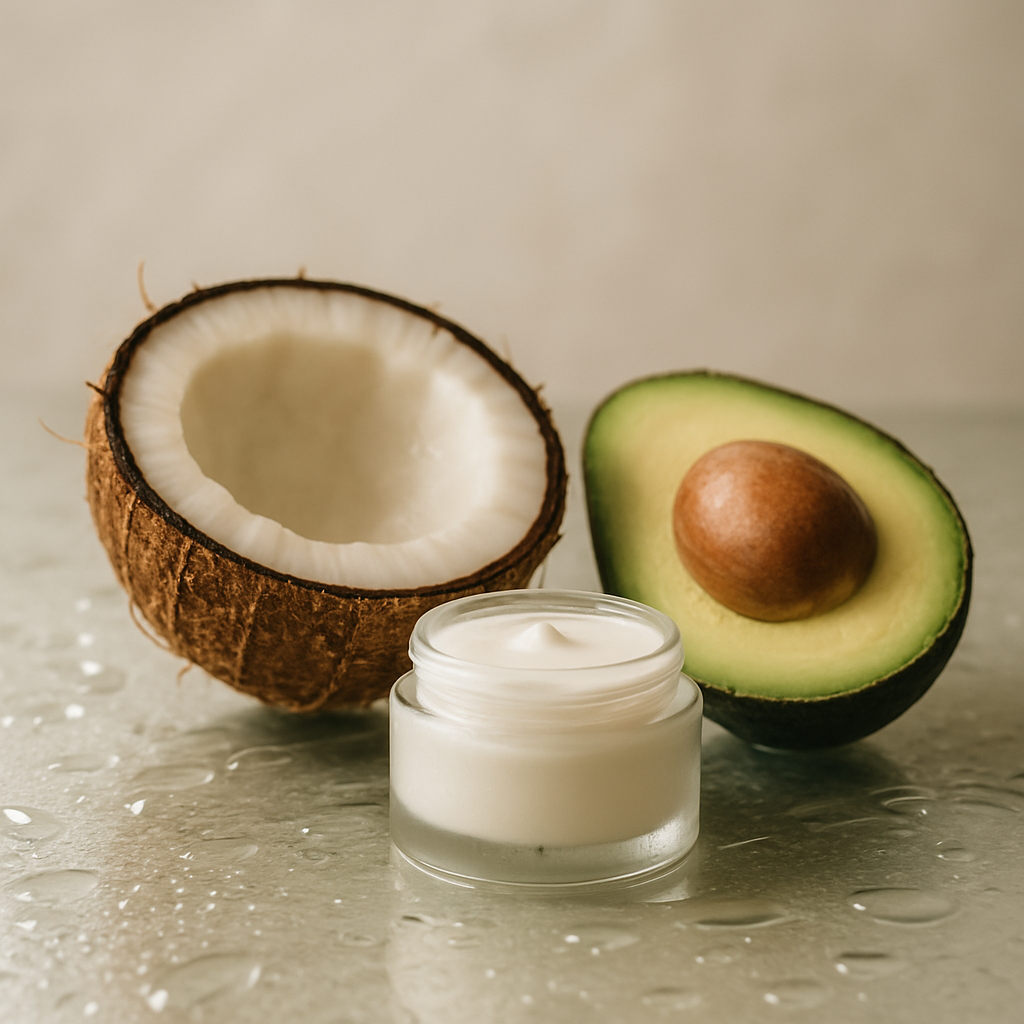
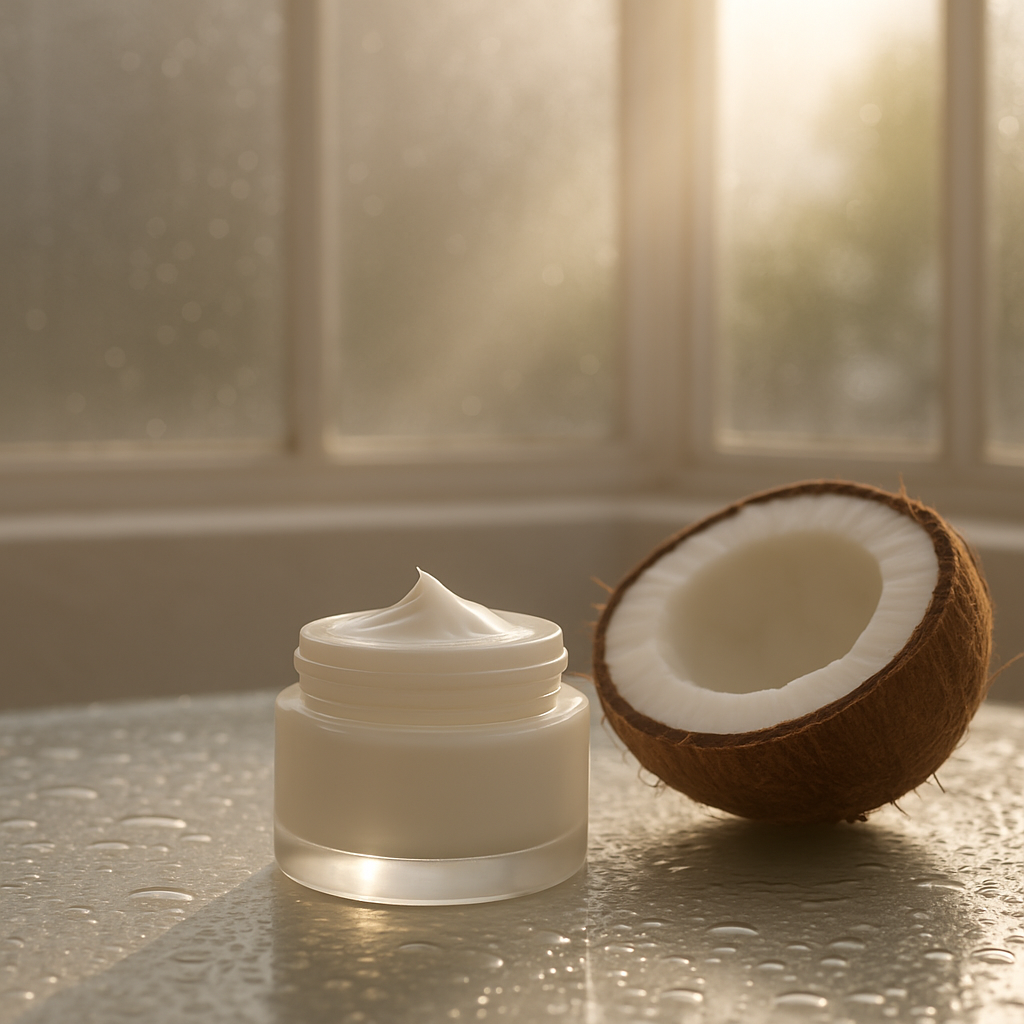
The coconut moisturizing cream for face and body from AlmaDerm is formulated with coconut oil, vitamin E, and lauric acid to deeply hydrate, soften, and help protect the skin from drying out. This makes it a practical choice for people who want one versatile cream for a simple, natural routine.
On the face, coconut cream can be used as a comfort layer. It helps smooth dry patches, soften rough texture, and support the skin after exposure to heat, wind, or air conditioning. For summer, the key is dosage: a pea-sized amount is often enough for the whole face, especially if your skin is normal, combination, or oily.
It is also important to say clearly: coconut cream is not sun protection. It may support the skin barrier, but it does not block UV rays. During the day, always apply a broad-spectrum SPF as the final step of your morning routine.
Key Ingredients: Coconut Oil, Vitamin E, and Lauric Acid
Coconut oil is loved in natural skincare because it is rich and emollient. It helps soften the skin surface and creates a protective feel that is especially comforting for dry or rough areas. In summer, this can be helpful after cleansing, swimming, or spending time in air-conditioned rooms.
Vitamin E is a classic skincare antioxidant used in many nourishing formulas. It helps support the skin’s natural defense against environmental stressors. For daily beauty care, it contributes to a softer, smoother, more cared-for appearance.
Lauric acid, naturally associated with coconut oil, adds to the protective character of the formula. It is one reason coconut-based skincare feels so comforting on dry or delicate skin. If your skin is very acne-prone or easily congested, introduce coconut cream slowly and observe how your skin responds.
Natural ingredients can be powerful, but every skin is individual. If you have persistent irritation, acne, eczema, rosacea, or any medical skin condition, consult a dermatologist before changing your routine.
A 3-Step Minimalist Summer Routine
Luxury skincare does not need to be complicated. In hot weather, shorter routines are often more consistent and more comfortable. The goal is to cleanse gently, hydrate wisely, and protect from UV exposure.
Morning: 3 steps for hydrated summer skin
- Step 1: Cleanse gently. Remove sweat and overnight buildup without stripping the skin.
- Step 2: Moisturize lightly. Apply a thin layer of coconut cream if your skin feels dry, tight, or exposed to air conditioning.
- Step 3: Protect with SPF. Use sunscreen every morning. If you prefer an AlmaDerm daytime option with UV protection, consider the collagen face cream with UV protection as part of your daytime routine, while still following local sun-protection guidance and reapplication needs.
Evening: repair the feeling of dryness
- Cleanse away SPF, sweat, and pollution. A clean face helps your moisturizer work more evenly.
- Apply targeted hydration if needed. If your skin is mature or dehydrated, a serum step can be helpful.
- Seal with a small amount of coconut cream. Focus on cheeks, around the mouth, or dry areas rather than applying a thick layer everywhere.
How to Choose by Skin Type and Age
The right moisturizer is not only about the ingredient list; it is also about your skin type, age, climate, and lifestyle. Here is a simple guide.
Dry skin
Dry skin usually benefits most from coconut cream. Use it morning and evening if comfortable, especially on cheeks and dry zones. In summer, you may prefer a thinner layer in the morning and a richer layer at night.
Combination skin
Apply coconut cream strategically. Use it on dry areas and avoid over-layering on the T-zone if you become shiny quickly. This keeps the routine balanced and prevents a heavy feeling.
Oily skin
Oily skin can still become dehydrated, but rich textures may feel too much for some. Use a tiny amount only when needed, or reserve coconut cream for nighttime, after-sun dryness, or air-conditioned environments. If breakouts increase, pause use and speak with a dermatologist.
Sensitive skin
Sensitive skin often needs simple, comforting formulas. If your skin prefers extra-gentle care, the gentle cream for babies and sensitive skin can be a suitable option for delicate areas, thanks to ingredients such as almond oil, shea butter, and zinc. Always patch test when introducing a new product.
Mature skin
Mature skin may need both hydration and nourishment. Coconut cream can support softness, while richer anti-age textures may be useful at night. For a more nourishing option, the natural anti-age face cream with shea butter and beeswax offers a luxurious, protective feel for skin that needs extra comfort.
SPF, After-Sun Care, and Coconut Cream
One of the biggest summer skincare misunderstandings is the idea that oils or rich creams can replace sunscreen. They cannot. UV rays contribute to premature skin aging, dark spots, sunburn, and long-term skin damage. A coconut moisturizing cream supports hydration and softness, but SPF is essential during the day.
For a practical morning routine, cleanse, apply lightweight hydration if needed, then use SPF as your last skincare step before makeup. If you are outdoors, sweating, swimming, or spending time in intense sun, reapply sunscreen according to the product instructions.
After sun exposure, coconut cream can be used to restore a feeling of comfort if the skin feels dry from heat, salt water, or air conditioning. Apply after a cool shower and gentle cleansing. Do not apply rich creams to actively sunburned, blistered, or painful skin without professional advice; in those cases, consult a dermatologist or healthcare professional.
If you prefer a ready-made day routine, the daily collagen skincare set brings together a cleanser, serum, and collagen cream with SPF 30, making it easier to stay consistent with morning care.
Common Mistakes
Coconut moisturizing cream is simple to use, but the results depend on how you apply it. Avoid these common mistakes:
- Using too much product. A thick layer can feel heavy in hot weather. Start with a pea-sized amount.
- Skipping SPF. Coconut cream protects from dryness, not UV radiation.
- Applying it over sweat. Cleanse or rinse first so the cream can sit comfortably on the skin.
- Using the same amount on every area. Dry cheeks may need more; the oily T-zone may need less.
- Ignoring your skin’s response. If pores feel congested or breakouts increase, reduce frequency or stop use.
- Layering too many rich products. In summer, minimalist routines often work better than heavy layering.
- Forgetting after-sun hydration. Heat, salt, and air conditioning can leave the skin thirsty even when it looks shiny.
FAQ
Can I use coconut moisturizing cream on my face every day?
Yes, many people can use coconut moisturizing cream daily, especially if their skin is dry, normal, or exposed to air conditioning. If your skin is oily or acne-prone, start with a small amount a few times per week and monitor your skin’s response.
Does coconut cream protect the skin from the sun?
No. Coconut cream can help protect the skin from dryness, but it does not replace sunscreen. Use a broad-spectrum SPF every morning and reapply as needed, especially in summer.
Is coconut cream good for oily or combination skin?
It can be, but application matters. Use a very thin layer, focus on dry areas, and avoid applying too much on the T-zone. If your skin becomes congested, reduce use.
Can I use coconut cream after sun exposure?
Yes, it can help the skin feel softer and more comfortable after heat, swimming, or air conditioning. Do not use it as treatment for severe sunburn or irritated skin; seek professional advice if the skin is painful or damaged.
At what age should I start using a moisturizing cream?
Moisturizer can be useful at any adult age when the skin feels dry, tight, or dehydrated. Younger skin may need only a light amount, while mature skin often benefits from more nourishing textures and consistent barrier support.
Final note: Coconut moisturizing cream is a comforting, natural way to support facial skin against dryness, tightness, and summer dehydration. Use it lightly, pair it with daily sun protection, and adjust the amount to your skin type. For persistent irritation, acne, or sensitivity, always consult a dermatologist.