Summer can be beautiful for the skin and hair, but it also brings heat, sweat, UV exposure, sea salt, chlorine, and more frequent washing. For many people, this means an oilier scalp, dry ends, frizz, and hair that feels less fresh by the end of the day.
Rosemary essential oil has become a favorite in natural hair care because it offers a clean, herbal freshness and can be used in very small amounts as part of a scalp-focused routine. The key is not to use more, but to use it correctly: diluted, consistent, and matched to your hair type.
Below is a practical, summer-friendly guide to the benefits of rosemary essential oil in hair care, with minimalist routines that fit busy mornings, gym days, travel, and sensitive scalps.
Table of Contents
Why summer changes your scalp and hair needs
In hot climates, including the UAE, the scalp often behaves differently than it does in cooler months. Sweat, sunscreen near the hairline, styling products, and dust can build up faster. At the same time, sun, air-conditioning, salt water, and chlorine can leave the hair lengths feeling rough or dehydrated.
This is why a summer hair routine should be light, targeted, and easy to rinse out. Heavy layers may feel luxurious at night, but during the day they can attract residue and make fine or oily hair feel flat. Rosemary essential oil fits well into summer care because only a few diluted drops are needed, and it is most useful as a pre-wash scalp step rather than a leave-on layer.
Key benefits of rosemary essential oil for hair
Rosemary essential oil is valued for its crisp herbal aroma and refreshing sensation on the scalp. In natural beauty routines, it is often used to support the appearance of stronger, healthier-looking hair by caring for the scalp environment.
When properly diluted, a pure rosemary essential oil for scalp massage can help make a pre-wash ritual feel energizing and clean. Many people enjoy it when the scalp feels heavy, oily, or tired after heat and sweating.
Its main beauty benefits include:
- A fresher-feeling scalp: helpful when heat and sweat make the roots feel greasy more quickly.
- A more invigorating massage ritual: scalp massage supports a sense of relaxation and helps distribute the diluted oil evenly.
- Better-looking roots: consistent scalp care can support hair that appears more balanced and less weighed down.
- A natural aromatic experience: rosemary has a clean, spa-like scent that pairs beautifully with minimalist care.
- Simple compatibility: it can be blended with nourishing carrier oils and used before shampooing.
It is important to keep expectations realistic. Rosemary essential oil is a cosmetic ingredient, not a medical treatment for hair loss, scalp disorders, or hormonal changes. If you notice sudden shedding, irritation, scaling, or persistent itching, consult a dermatologist.
How to use rosemary essential oil safely
Essential oils are concentrated botanical extracts. Natural does not mean undiluted. Rosemary essential oil should not be applied directly to the scalp, especially if you have sensitive skin, a reactive scalp, are pregnant, have epilepsy, or are using medicated scalp products. In these cases, speak with a qualified professional first.
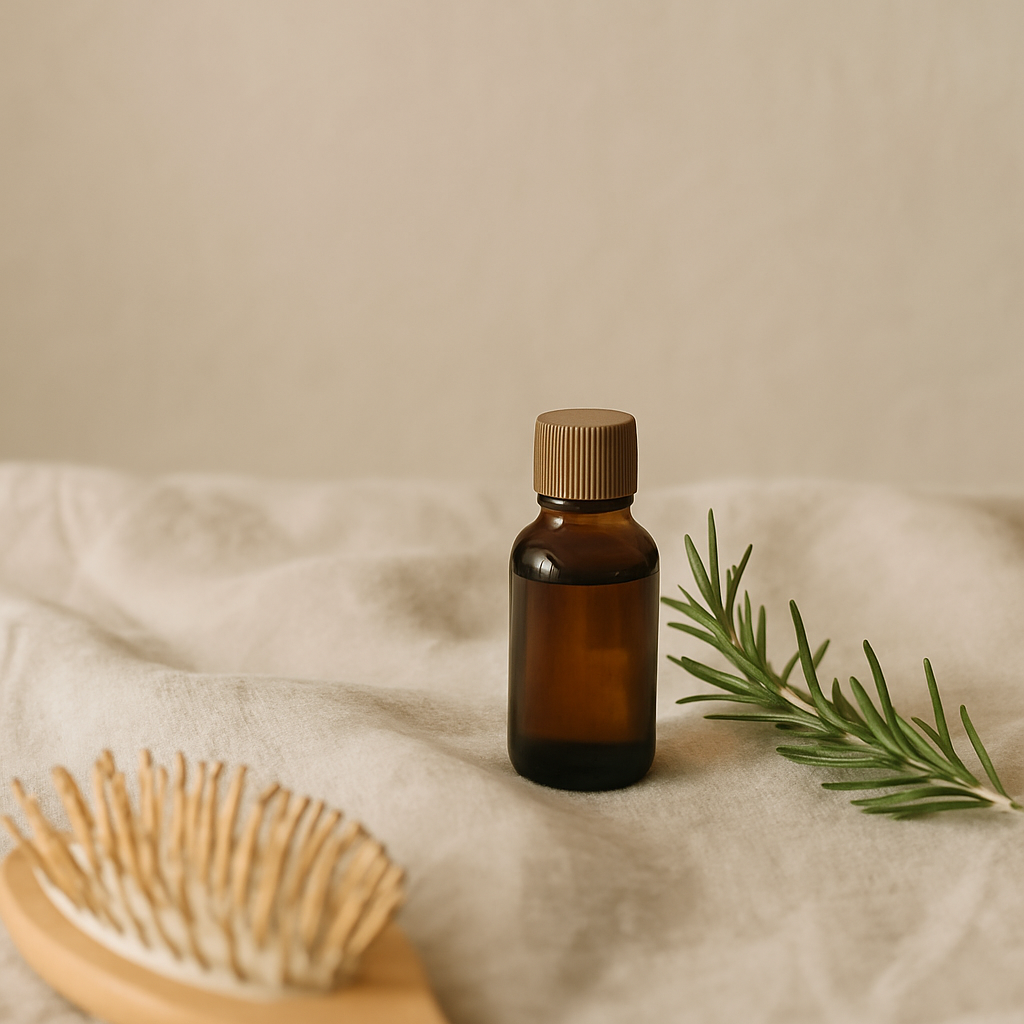
For a scalp massage oil, dilute rosemary essential oil in a carrier oil. A gentle starting point is 1 drop of rosemary essential oil in 1 teaspoon of carrier oil. Patch test behind the ear or on the inner arm and wait 24 hours before applying to the scalp.
For summer, choose a short contact method: apply the diluted blend to the scalp, massage for 2 to 5 minutes, leave for 20 to 40 minutes, then shampoo. This gives you the aromatic and scalp-care benefits without leaving oil to mix with sweat throughout the day.
A minimalist 3-step rosemary hair routine
If you want results from natural care, consistency matters more than a complicated shelf. A simple weekly routine is often easier to maintain, especially in summer.
Step 1: Pre-wash scalp massage
Mix 1 drop of rosemary essential oil with 1 teaspoon of a carrier oil. Massage into the scalp using fingertips, not nails. Focus on areas that feel oily or tense, such as the crown, temples, and hairline. Keep the massage gentle; aggressive rubbing can irritate the scalp and cause breakage.
Step 2: Cleanse thoroughly
After 20 to 40 minutes, shampoo well. If you used more carrier oil or have fine hair, shampoo twice. The goal is a fresh scalp, not an oily residue. On very hot days, rinse the hairline carefully because sunscreen, sweat, and oil can collect there.
Step 3: Nourish the lengths lightly
After washing, focus moisture on the mid-lengths and ends rather than the scalp. A few drops of 100% pure argan oil for dry ends can help soften roughness and add natural-looking shine, especially after sun, sea, or pool exposure. Use less than you think you need; summer hair care works best when the finish stays breathable.
How to adapt it to your hair type
The same ingredient can behave differently depending on hair density, scalp oiliness, curl pattern, and styling habits. Use rosemary essential oil as a flexible ritual, not a one-size-fits-all rule.
- Oily scalp, fine hair: Use the rosemary pre-wash massage once weekly. Keep the blend very light and shampoo thoroughly. Avoid applying oils after washing near the roots.
- Combination scalp and dry ends: Use rosemary only on the scalp before washing, then nourish the ends with a tiny amount of argan oil after cleansing.
- Curly or textured hair: Use a richer carrier blend and focus on sectioning the scalp carefully. Protect the lengths with a lightweight oil finish to reduce frizz.
- Color-treated or heat-styled hair: Keep rosemary on the scalp and use reparative-feeling oils on the ends. Avoid adding essential oils directly to color or chemical treatments.
- Sensitive scalp: Start with half the amount, patch test, and use less frequently. If tingling becomes burning, rinse immediately and discontinue use.
For hair that feels dry, dull, or stressed by blow-drying and summer exposure, a natural argan-based hair serum for shine and softness can be used on the lengths while rosemary remains a scalp-only pre-wash step. This separation keeps the routine balanced: refresh the scalp, comfort the ends.
Routine ideas by age and lifestyle
A good routine should match real life. If it takes too long, it will not last. Here are simple ways to personalize rosemary hair care without adding unnecessary steps.
- In your 20s, active and busy: Use rosemary once a week after workouts or beach days as a pre-wash refresh. Keep styling minimal and protect the scalp from direct sun.
- In your 30s, balancing work and family: Choose one evening ritual each week. Massage, cleanse, and apply a light oil to the ends. The consistency is more important than the length of the treatment.
- In your 40s and beyond: Prioritize gentle scalp massage, hydration, and reduced heat styling. If changes in density or shedding appear suddenly, consult a dermatologist rather than relying only on cosmetic care.
- For frequent travelers: Keep the routine compact: rosemary essential oil, one carrier oil, and a light finishing serum. Avoid experimenting with new essential oil blends right before a trip.
- For hijab or covered hair routines: Sweat and friction can affect the scalp and roots. Use rosemary as a pre-wash refresh, dry hair fully before covering, and keep oils away from the scalp during daytime heat.
Summer also asks for scalp awareness. If you spend time outdoors, protect exposed areas with physical coverage and appropriate SPF at the hairline. After sun exposure, focus on gentle cleansing and hydration rather than strong exfoliation or heavy oiling.
Common mistakes
Rosemary essential oil can be a beautiful addition to hair care, but the wrong method may cause irritation or disappointing results. Avoid these common mistakes:
- Using it undiluted: Essential oils are concentrated and should be mixed with a carrier oil before scalp application.
- Leaving it on all day in hot weather: In summer, a short pre-wash treatment is usually more comfortable and less greasy.
- Applying too much oil to fine hair: More oil does not mean better care. It may weigh roots down and make hair look flat.
- Skipping the patch test: Sensitive skin can react even to natural ingredients.
- Massaging too aggressively: Use soft fingertip pressure. Scratching can irritate the scalp.
- Expecting medical results: Rosemary essential oil is not a treatment for medical hair loss or scalp disease.
- Forgetting sun protection: Oils do not replace SPF, hats, or shade for the scalp and hairline.
FAQ
Can I apply rosemary essential oil directly to my scalp?
No. It should be diluted in a carrier oil before use. Start with a low dilution, patch test first, and rinse it out if you feel burning, strong redness, or discomfort.
How often should I use rosemary essential oil for hair?
For most people, once weekly is a good starting point. Oily scalps may prefer a light weekly pre-wash massage, while sensitive scalps may do better every two weeks.
Can rosemary essential oil help with hair growth?
It can support a healthy-feeling scalp routine and may help hair look stronger when used consistently, but it should not be presented as a cure for hair loss. For sudden or persistent shedding, consult a dermatologist.
Is rosemary essential oil suitable for summer?
Yes, when used carefully. Apply it diluted as a pre-wash treatment, avoid sun exposure while it is on the scalp, and protect exposed scalp areas with shade, hats, or suitable SPF.
What should I pair with rosemary essential oil?
Pair it with a nourishing carrier oil for scalp dilution and use argan-based care on the lengths if your ends feel dry. Keep the scalp treatment and hair-length care separate for a lighter finish.
Final note: Rosemary essential oil is best understood as a concentrated botanical tool: powerful in small amounts, most effective when diluted, and most comfortable in summer as a rinse-out scalp treatment. If your scalp is irritated, if you are pregnant, or if you are experiencing significant hair changes, seek advice from a dermatologist before starting any new essential oil routine.