How Calendula and Honey Care for Baby’s Sensitive Skin in Summer
Baby skin is naturally soft, but it is also thinner, more reactive, and more vulnerable to dryness, heat, friction, and everyday irritation. In summer, this sensitivity can become more noticeable: sweating, frequent bathing, air-conditioning, sunscreen removal, and warm outdoor temperatures can all disturb the skin’s comfort.
For parents who prefer a minimalist, natural approach, two traditional ingredients stand out for gentle care: calendula and honey. Used thoughtfully, they can help support the skin barrier, comfort dry areas, and keep cleansing mild without overwhelming delicate skin.
This guide follows a practical problem to solution structure, with a short summer-friendly routine for babies and young children. As always, if your baby has persistent redness, eczema-like symptoms, open skin, infection, allergies, or any skin concern that worries you, consult a pediatrician or dermatologist before introducing new products.
Table of Contents
1. Why Baby Skin Reacts More in Summer
The main problem with baby skincare is not usually a lack of products. It is often too much: too much washing, too many fragranced formulas, too many layers, and too many changes at once. Baby skin has a developing barrier, which means it loses moisture more easily and can react faster to friction, sweat, and temperature changes.
In summer, the triggers multiply. Heat can lead to sweating around the neck folds, diaper area, back, and behind the knees. Sunscreen, although essential when recommended for age and exposure, may need careful removal at the end of the day. Pool water, sea salt, and air-conditioning can leave skin feeling dry or tight. Even soft clothing can rub when it becomes damp with sweat.
The solution is a simple routine that respects the skin barrier: gentle cleansing only when needed, light hydration, careful protection from sun and heat, and soothing care for dry patches. Calendula and honey fit beautifully into this approach because they are traditionally valued in natural skincare for comfort, softness, and mild care.
2. How Calendula Supports Sensitive Baby Skin
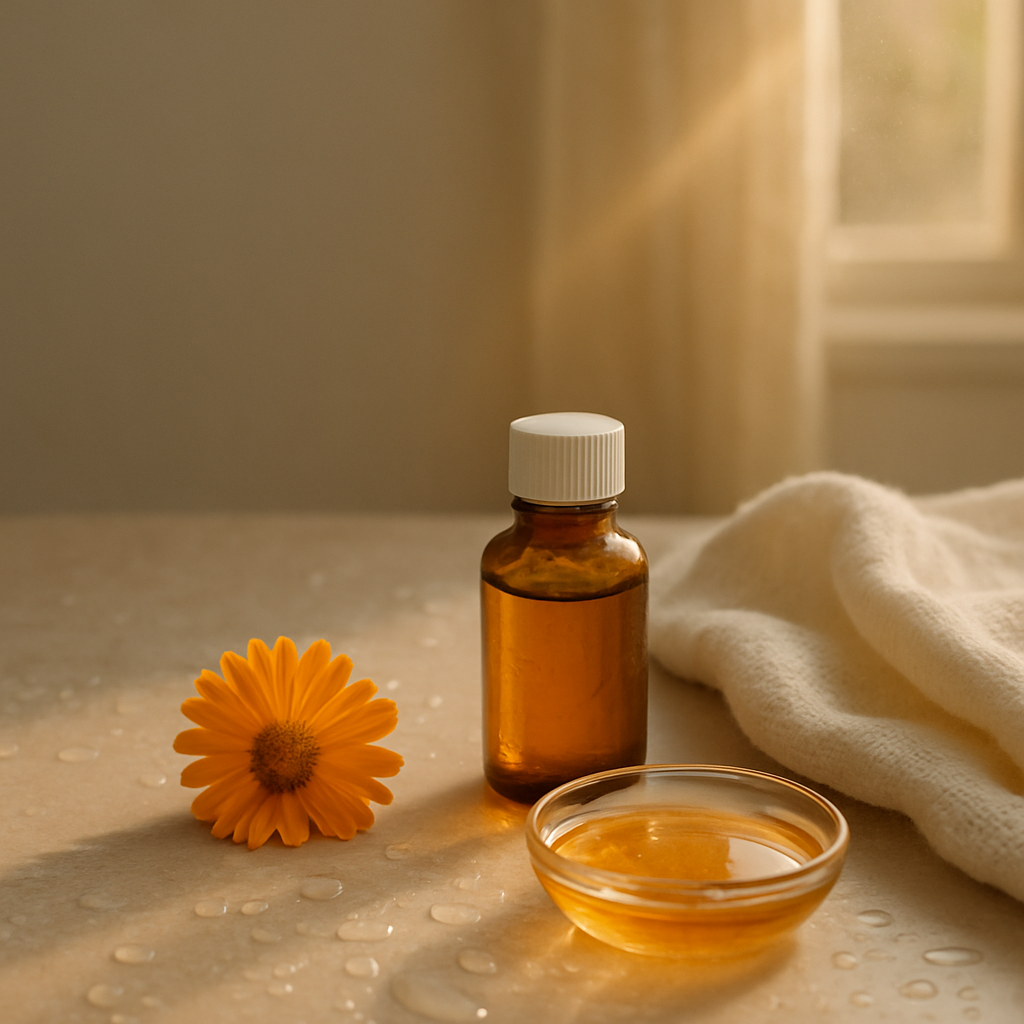
Calendula, also known as marigold, has a long history in traditional skin care for delicate, dry, and easily irritated skin. In natural cosmetics, calendula is often used as an oil macerate, allowing its skin-comforting properties to be infused into a nourishing base.
For babies, the key benefit of calendula is its compatibility with a barrier-supporting routine. When skin is dry or mildly uncomfortable from bathing, weather, or friction, a calendula-based cream can help create a soft, protective layer and reduce the feeling of tightness. It is especially useful on areas that tend to become dry, such as cheeks, elbows, knees, and small rough patches.
AlmaDerm’s calendula-rich comfort cream for sensitive skin combines calendula macerate, olive oil, and beeswax. This makes it suitable for a simple routine where the goal is not to overload the skin, but to comfort and protect it with a small amount of product.
Because baby skin is individual, always patch test first. Apply a tiny amount to a small area and observe for 24 hours. If redness, rash, or discomfort appears, stop use and seek professional advice.
3. How Honey Helps Gentle Cleansing
Another common summer problem is over-cleansing. When babies sweat, parents naturally want them to feel fresh. But frequent washing with harsh cleansers can remove natural lipids from the skin surface, leaving it drier and more reactive.
Honey is loved in natural skincare because it helps leave skin feeling soft and comfortable. In cleansing products, it can support a gentler washing experience, especially when paired with nourishing oils. A mild soap can be helpful for occasional cleansing of the body, hands, feet, and areas where sweat or sunscreen residue builds up.
For families looking for a natural option, AlmaDerm’s gentle honey-based cleansing bar is made with natural honey, olive oil, and conifer oils. For babies, use cleansing bars sparingly and avoid the eye area, intimate mucous membranes, and any broken or inflamed skin. If your child has known allergies to bee-derived ingredients or essential oils, consult a doctor before use.
The goal is not to make baby skin “squeaky clean.” In fact, squeaky clean often means the skin has been stripped. The best result after cleansing is skin that feels fresh, calm, and not tight.
4. A Minimalist 3-Step Summer Routine for Sensitive Baby Skin
When it comes to babies, a short routine is usually the most elegant and effective. Think of it as three steps: protect, cleanse, comfort.
Step 1: Protect from heat and sun first
Before applying any skincare, reduce the triggers. Keep your baby in shade, dress them in lightweight breathable fabrics, and avoid the strongest midday sun. For SPF, follow your pediatrician’s advice, especially for infants. Choose a broad-spectrum sunscreen appropriate for your baby’s age when needed, and remember that sunscreen does not replace shade.
Step 2: Cleanse only what needs cleansing
After sweating, outdoor play, or sunscreen use, cleanse gently. A quick lukewarm rinse may be enough on many days. When a cleanser is needed, use a mild option, lather in your hands first, apply briefly, and rinse well. Pat dry with a soft towel instead of rubbing.
Step 3: Comfort dry areas with calendula
Apply a very thin layer of calendula cream only where needed: cheeks, dry patches, or areas prone to friction. In humid summer weather, heavy layering can trap sweat, so less is more. If the skin is healthy and comfortable, you do not need to apply cream everywhere every time.
5. How to Choose Products by Age, Skin Type, and Need
Baby skincare should be chosen according to age, sensitivity, and the specific situation. A newborn’s needs are different from a toddler’s, and a baby with very reactive skin needs a slower, more cautious approach.
For newborns and very young babies
Keep the routine extremely minimal. Use water for most cleansing, avoid fragranced products, and introduce any new product only with pediatric guidance. If the skin looks irritated, cracked, or persistently red, do not experiment; seek medical advice.
For babies with normal but delicate skin
Use gentle cleansing only when needed and apply a small amount of calendula cream to dry areas. Avoid daily full-body product layering unless the skin is visibly dry.
For toddlers exposed to sweat, sand, and sunscreen
Toddlers may need more frequent cleansing in summer, especially after beach or pool days. Still, keep it mild. Rinse off salt, chlorine, and sunscreen, then comfort dry skin with a thin layer of calendula cream.
For family skin prone to dryness and irritation
Some families prefer having a small natural care kit at home for dry patches and seasonal discomfort. AlmaDerm’s natural irritated-skin care set includes calendula cream, honey soap, and a richer balm. For babies, use only age-appropriate items cautiously and with professional advice if the skin is highly reactive.
6. After-Sun, Sweat, and Heat Comfort
Summer baby care is not about tanning or after-sun glamour. It is about prevention, cooling, and barrier comfort. If your baby has had sun exposure, the first step is to move indoors or into shade, offer fluids appropriate for age, and cool the skin gently with lukewarm water or a soft damp cloth.
Do not apply rich balms to hot, red, or sunburned skin without medical advice. Sunburn in babies and young children should be taken seriously, and a healthcare professional should be consulted. Skincare can support comfort only when the skin is intact and the situation is mild.
For sweat-related discomfort, focus on folds: neck, underarms, behind knees, and diaper edges. Keep these areas clean and dry. Avoid thick layers in skin folds during humid weather, as they may trap moisture. If a dry patch appears outside the folds, a small amount of calendula cream can help soften and protect.
For older children and adults in the family, a richer balm may be useful on very dry areas such as heels, elbows, or rough hands. AlmaDerm’s richer natural balm for very dry family skin contains conifer oils, resin, beeswax, honey, and propolis. Because it includes bee-derived ingredients and aromatic components, it should be used with extra caution around babies and only after appropriate guidance.
7. Common Mistakes
Even loving, careful routines can irritate baby skin when they become too complicated. Here are the most common mistakes to avoid:
- Using too many products at once: Introduce one product at a time so you can notice how the skin responds.
- Over-cleansing after every sweat: A lukewarm water rinse is often enough; cleanser is not always necessary.
- Applying thick creams before going into the heat: Heavy layers can feel uncomfortable and may trap sweat.
- Skipping SPF guidance: Natural skincare does not replace pediatrician-approved sun protection, shade, hats, and protective clothing.
- Rubbing with towels: Pat skin dry gently, especially in folds and on cheeks.
- Using adult exfoliants on children: Scrubs and exfoliating routines are not appropriate for baby skin.
- Ignoring persistent symptoms: Ongoing redness, swelling, oozing, itching, or pain should be assessed by a doctor.
8. FAQ
Can I use calendula cream on my baby every day?
It depends on your baby’s age and skin needs. For many babies, a small amount on dry areas is enough, especially in summer. Daily full-body application may not be necessary. Always patch test first and consult a pediatrician if your baby has very sensitive or eczema-prone skin.
Is honey suitable for baby skincare?
Honey in a properly formulated rinse-off skincare product is different from feeding honey to infants. However, babies can still react to ingredients, including bee-derived ingredients. Use cautiously, rinse well, avoid broken skin, and ask a doctor if your baby has allergies or very reactive skin.
Can calendula or honey replace sunscreen?
No. Calendula and honey do not provide SPF protection. For summer, use shade, protective clothing, hats, and a broad-spectrum sunscreen suitable for your child’s age as recommended by your pediatrician or dermatologist.
What should I do if my baby gets heat rash?
Keep the skin cool, dry, and free from heavy layers. Dress your baby in breathable clothing and avoid overheating. If the rash is severe, persistent, painful, or accompanied by fever or signs of infection, seek medical advice.
How often should I bathe my baby in summer?
Bathing frequency depends on heat, sweating, and your baby’s skin. Short lukewarm baths or rinses can help after sweaty days, but avoid harsh cleansing every time. Pat dry and moisturize only where the skin needs support.
Final Note
Calendula and honey can be beautiful allies in a gentle, natural approach to baby skincare, especially during summer when heat, sweat, and frequent washing can challenge the skin barrier. The best routine is short, calm, and consistent: protect from sun and heat, cleanse mildly, and comfort dry areas without overloading the skin.
This article is for educational skincare guidance only and does not replace medical advice. For babies, persistent irritation, suspected allergies, eczema, sunburn, or any unusual skin changes should always be discussed with a pediatrician or dermatologist.