Sensitive skin rarely asks for more; it asks for better. After summer sun, travel, air conditioning, and frequent cleansing, autumn is the perfect season to simplify your routine and help the skin feel calm, nourished, and protected before colder days arrive.
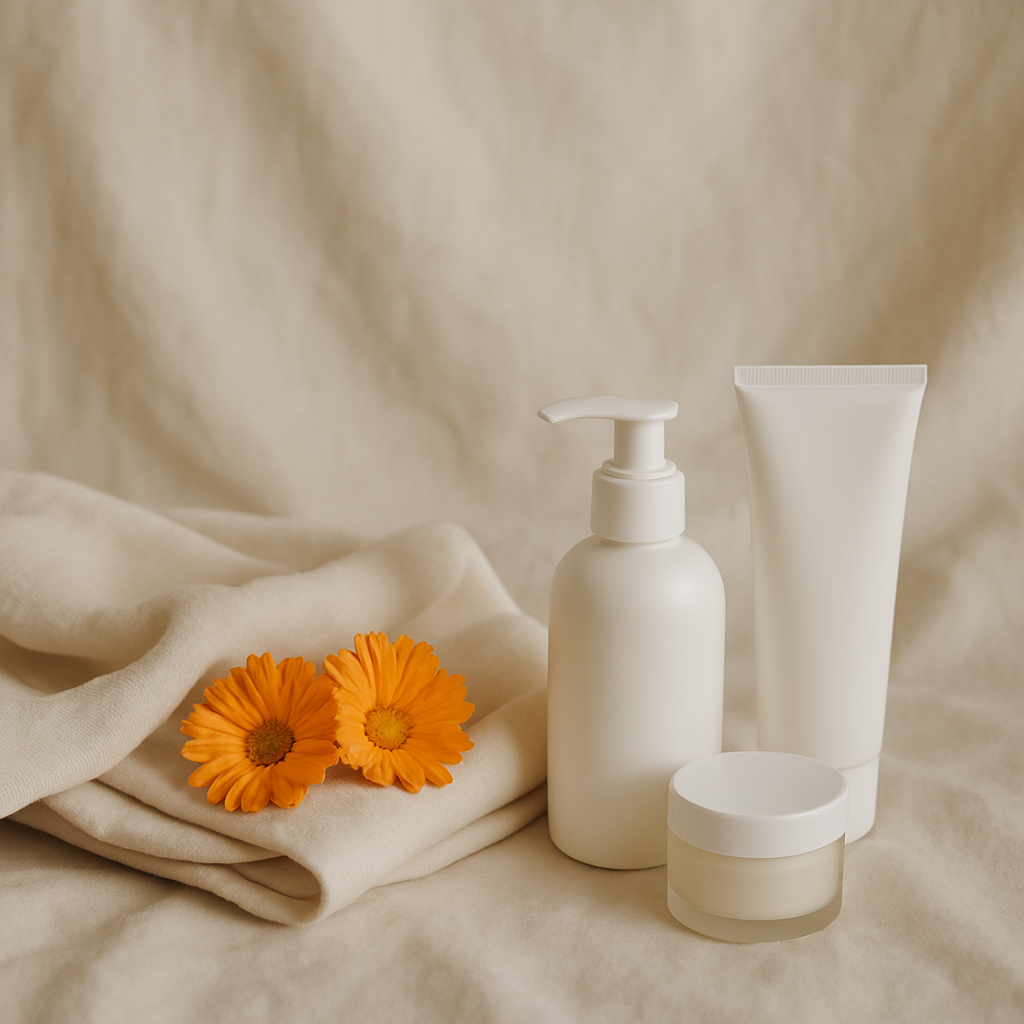
Calendula, also known as marigold, is one of the most loved botanical ingredients for delicate skin. In natural skincare, it is valued for its comforting feel and its role in supporting a softer, more balanced skin barrier without overwhelming the complexion.
If your skin often feels tight, looks flushed, or reacts to new products, this minimalist autumn routine will help you choose fewer steps with more intention. As always, if you experience persistent irritation, eczema-like symptoms, or sudden changes, consult a dermatologist.
Table of Contents
Why Sensitive Skin Reacts in Autumn
Autumn is a transition season, and sensitive skin often notices every change first. Outdoor air becomes cooler and drier, while indoor heating can reduce moisture in the environment. At the same time, the skin may still be recovering from summer: sun exposure, sea salt, chlorine, sweat, and stronger cleansing can leave it feeling thinner, drier, or more easily irritated.
The problem is not always a lack of products. Very often, it is too much stimulation: exfoliating too often, changing routines too quickly, layering active formulas, or using rich creams only after the skin is already uncomfortable. The solution is a calm, consistent routine that focuses on cleansing gently, moisturizing generously, and protecting the skin barrier every day.
Why Calendula Belongs in a Gentle Routine
Calendula is a classic botanical for delicate skin because it works beautifully in simple, comforting formulas. It is especially suitable when your goal is not to chase instant transformation, but to restore a feeling of softness, flexibility, and daily comfort.
In AlmaDerm care, calendula appears in formulas designed for sensitive, dry, and easily irritated areas. A calendula-rich soothing cream for face and body can be a practical choice for autumn because it combines calendula macerate with nourishing oils and beeswax, creating a protective, cushiony finish. This type of texture is particularly helpful when the cheeks, hands, elbows, or other dry zones feel exposed to wind and colder air.
For people who prefer natural skincare, calendula also fits well into a minimalist approach. Instead of using many products with competing purposes, one well-chosen cream can support several needs: comfort after cleansing, targeted care for dry patches, and an extra protective layer before going outdoors.
A 3-Step Minimalist Routine for Sensitive Skin
A short routine is often the most elegant solution for sensitive skin. The goal is to reduce friction, avoid unnecessary actives, and repeat a few supportive steps consistently.
Step 1: Cleanse gently, not aggressively
Use lukewarm water and a mild cleanser only when needed, especially in the morning. Avoid hot water, rough washcloths, and over-cleansing. If your skin feels tight immediately after washing, your cleansing step may be too strong or too frequent.
Step 2: Moisturize while the skin is slightly damp
After cleansing, apply a small amount of cream before the skin is completely dry. This helps seal in surface moisture and reduces the tight feeling that often appears in autumn. For delicate areas, choose a formula that feels nourishing but not perfumed or overly complex.
Step 3: Protect dry zones before exposure
Before leaving home on windy or cool days, apply a thin layer of a richer balm-like cream to areas that react first: cheeks, lips around the mouth, hands, or any dry patches. If your skin is very delicate or you are caring for a child’s skin, a gentle cream for babies and sensitive skin can be useful for extra comfort thanks to its nurturing texture with almond oil, shea butter, and zinc.
How to Choose Products by Skin Type, Age, and Needs
Sensitive skin is not one single skin type. It can be dry, combination, mature, young, or temporarily reactive. Choosing the right texture matters as much as choosing the right ingredient.
- Dry and tight sensitive skin: Choose richer creams that leave a soft protective veil. Calendula, olive oil, beeswax, shea butter, and almond oil are comforting choices in autumn.
- Combination sensitive skin: Apply richer formulas only where needed, such as cheeks, jawline, and dry patches. Keep the T-zone lighter and avoid heavy layering.
- Mature sensitive skin: Prioritize barrier comfort, hydration, and consistency. Mature skin may feel drier in autumn, so a nourishing night layer can be especially helpful.
- Teen or young sensitive skin: Keep routines very simple. Avoid experimenting with many actives at once, especially if the skin is already red or uncomfortable.
- Very delicate family skincare: For children or extremely delicate skin, choose mild, protective formulas and patch test first.
If the skin is going through a visibly irritated period, a ready-made routine can help reduce decision fatigue. AlmaDerm’s natural three-product set for troubled skin brings together gentle cleansing and comforting care, making it easier to follow a simple structure without overcomplicating the shelf.
Morning and Evening Rhythm for Autumn
Your morning routine should be protective and quick. Rinse with lukewarm water or cleanse only if necessary, then apply a small amount of moisturizer. If you spend time outdoors, add sunscreen appropriate for your skin type, even in autumn, because UV exposure is still present.
Your evening routine can be slightly more nurturing. Remove impurities gently, then apply your calendula cream or a sensitive-skin moisturizer while the skin is still comfortable. If your face feels exposed after a cold day, apply a second thin layer only to dry areas rather than covering the whole face heavily.
For those who experience seasonal dryness beyond the face, do not forget hands, neck, elbows, and knees. These zones often show the first signs of weather change. A targeted cream with calendula or a protective balm texture can make your routine feel more complete without adding many steps.
Extra Care for Body and Intimate Sensitivity
Sensitive skin is not limited to the face. Autumn clothing, friction from tights or denim, colder weather, and reduced humidity can affect the body as well. When the skin on the body feels dry or uncomfortable, apply cream after showering while the skin is slightly damp, and avoid very hot showers.
For areas that are especially delicate, choose formulas created for that purpose. A natural intimate care cream with calendula and St. John’s wort may be suitable for external intimate-zone comfort as part of a gentle hygiene routine. Use only as directed, and speak with a healthcare professional if you notice persistent discomfort, unusual symptoms, or recurring irritation.
If your skin responds well to botanical oils but needs a different comforting profile, a soothing St. John’s wort cream for dry, sensitive areas can be considered for face or body zones that need extra nourishment. As with all sensitive-skin routines, introduce one product at a time.
Common Mistakes
When sensitive skin becomes uncomfortable, it is natural to want a fast solution. However, the fastest path is often to remove triggers and simplify. Avoid these common autumn mistakes:
- Changing everything at once: Introduce one new product at a time so you can understand how your skin responds.
- Using hot water: Heat can increase dryness and leave sensitive skin feeling tight after cleansing.
- Over-exfoliating after summer: Post-summer dullness may tempt you to scrub, but sensitive skin usually benefits from patience and barrier support first.
- Skipping moisturizer on combination skin: Oiliness and dehydration can exist together. Use lighter amounts rather than skipping care.
- Applying too much product: A thick layer is not always better. Start with a small amount and add more only to dry zones.
- Ignoring body skin: Hands, neck, and intimate areas can become sensitive in autumn too.
- Expecting one product to treat medical conditions: Natural skincare can support comfort, but ongoing redness, itching, or inflammation should be discussed with a dermatologist.
FAQ
Is calendula good for sensitive skin in autumn?
Calendula is a gentle botanical traditionally used in comforting skincare, and it fits well into autumn routines focused on dryness, softness, and barrier care. Choose simple formulas and patch test if your skin is highly reactive.
Can I use calendula cream every day?
Many people use calendula cream daily on dry or sensitive areas. Start with once a day, preferably in the evening, and adjust depending on how your skin feels.
Should sensitive skin exfoliate after summer?
Be careful. If your skin is red, tight, or reactive, focus on hydration and protection first. If you exfoliate, do it rarely and gently, and stop if your skin feels uncomfortable.
Is a minimalist routine enough for mature sensitive skin?
Yes, if the products are well chosen. Mature sensitive skin often benefits from consistency, nourishing textures, and fewer potential irritants rather than many active steps.
When should I see a dermatologist?
Consult a dermatologist if you have persistent redness, burning, scaling, itching, sudden reactions, or symptoms that do not improve with a simplified routine.
Final note: Sensitive skin thrives on calm consistency. This autumn, let your routine be shorter, softer, and more intentional, with calendula as a comforting botanical ally for the season ahead.