When temperatures rise, many people reduce their skincare routine because creams feel heavy, makeup melts faster, and the skin may look shiny by midday. The problem is that summer heat, sweating, sun exposure, and air conditioning can still leave the skin dehydrated, even when it appears oily on the surface.
This is where hyaluronic serum becomes especially valuable. Instead of thinking about hyaluronic acid only as a winter ingredient, it is better to see it as a smart, lightweight hydration step for every season. In summer, it helps the skin feel fresh, comfortable, and balanced without adding a greasy layer.
Below is a practical, problem-to-solution guide for using hyaluronic serum in hot climates, including the UAE, coastal holidays, busy workdays, and minimalist routines for different skin types.
Table of Contents
Why Summer Skin Gets Dehydrated
The main summer skincare problem is confusion between oiliness and hydration. Skin can produce more sebum in hot weather and still lack water. This often appears as shine, enlarged-looking pores, tightness after cleansing, dullness, or makeup that separates during the day.
Several summer factors can disturb the skin’s comfort: stronger UV exposure, frequent cleansing, salty sea water, chlorine, sweating, indoor air conditioning, and long flights. In the UAE and other hot climates, the shift between outdoor heat and cool indoor air can be particularly drying.
The solution is not always a richer cream. For many people, the better answer is a light hydrating layer under SPF. A serum with hyaluronic acid can deliver water-binding hydration while keeping the routine elegant, breathable, and suitable for daily use.
How Hyaluronic Serum Works
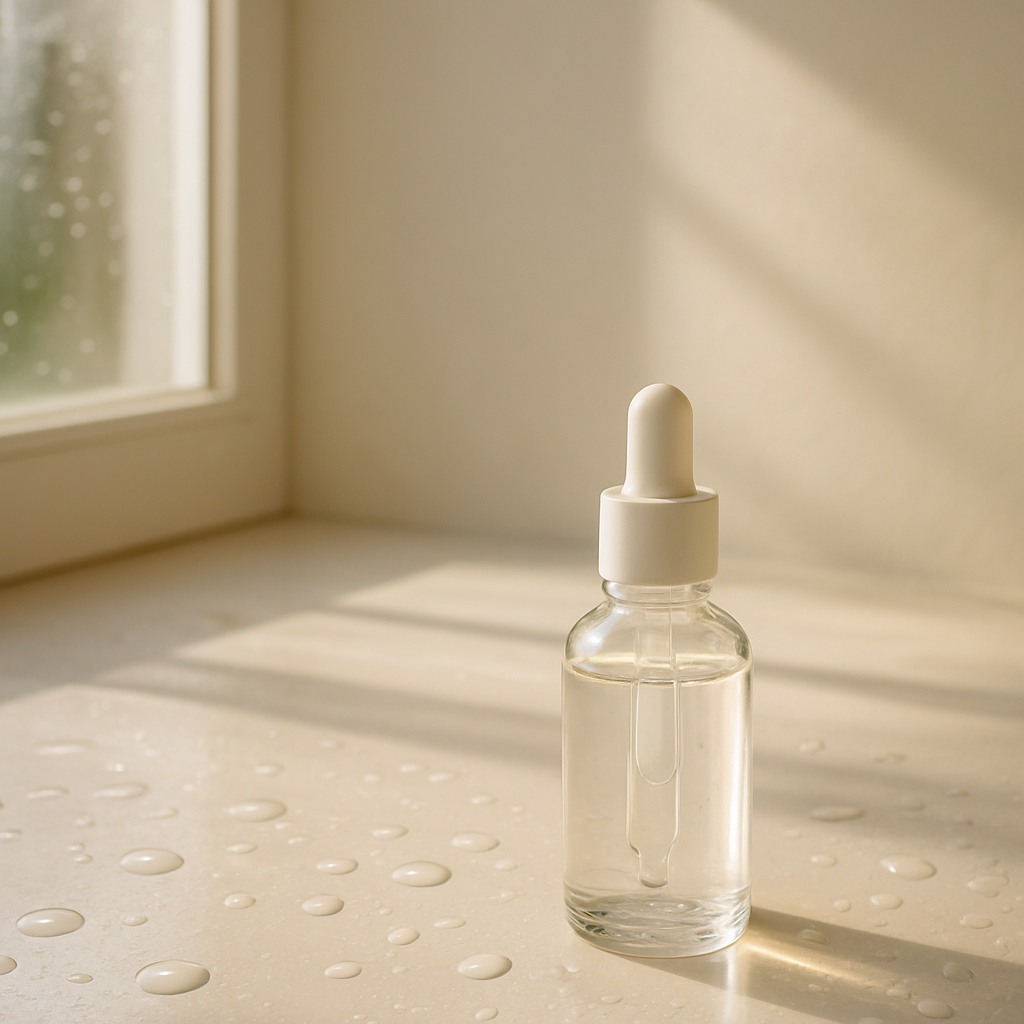
Hyaluronic acid is a humectant, meaning it attracts and holds water in the surface layers of the skin. In a serum, it can provide a plumping, fresh-feeling effect without the heaviness of dense creams. This makes it ideal for summer routines, especially under sunscreen.
For best results, apply hyaluronic serum to slightly damp skin, then seal it with a suitable cream or SPF. If it is applied to very dry skin without a follow-up product, the skin may not feel as comfortable, especially in dry indoor air. Think of it as a hydration magnet that works best when paired with a protective layer.
For a refined daily option, AlmaDerm’s lightweight serum with hyaluronic acid, active collagen and vitamins C and E fits well into a summer routine because it absorbs quickly and layers comfortably. It is especially useful when the skin needs hydration but you do not want a heavy finish.
3-Step Morning Routine for Hydrated Summer Skin
A summer morning routine should be simple, effective, and realistic. If it takes too long or feels sticky, most people will not maintain it. The goal is to hydrate, protect, and keep the skin comfortable throughout the day.
Step 1: Gentle cleanse
Start with a gentle cleanse to remove sweat, excess oil, and overnight skincare. Avoid harsh cleansing that leaves the skin squeaky or tight, because this can encourage imbalance and discomfort later in the day.
Step 2: Apply hyaluronic serum
Apply a few drops of serum to slightly damp skin. Press it in gently rather than rubbing aggressively. This step is helpful for all skin types, including oily and combination skin, because hydration and oil control are not the same thing.
Step 3: Finish with daytime protection
In summer, hydration is incomplete without sun protection. A daytime routine should always include broad-spectrum SPF, applied generously and reapplied as needed. If you prefer a ready-made morning concept, the daytime hydration and SPF routine set is a practical way to combine cleansing, serum care, and SPF-focused daily protection.
How to Choose Your Routine by Skin Type
The best summer routine depends on skin type, age, and lifestyle. A student walking outdoors, a professional moving between meetings and air conditioning, and someone on a beach holiday all need hydration, but the texture and timing may differ.
Oily and combination skin
Choose a minimal routine: cleanse, hyaluronic serum, and SPF. Avoid layering too many rich products in the morning. If your T-zone becomes shiny, keep the hydration step but use lighter amounts of cream or SPF and blot during the day instead of over-cleansing.
Dry skin
Dry skin may need hyaluronic serum plus a more comforting cream before SPF, especially if you spend time in air conditioning. Apply serum while the skin is slightly damp, then seal it in. This approach can reduce the feeling of tightness without making the routine feel heavy.
Sensitive skin
Sensitive skin benefits from consistency and fewer steps. Introduce one new product at a time and patch test when needed. AlmaDerm’s natural care philosophy, inspired by ingredients such as immortelle, calendula, lavender, propolis, and honey, is well aligned with gentle routines, but sensitivity is individual. If you experience persistent irritation, consult a dermatologist.
Mature skin
Mature skin often needs both hydration and support for a smoother appearance. A hyaluronic serum can improve the look of freshness, while evening products may focus on renewal. If you use retinol, apply it at night and be diligent with SPF during the day.
After-Sun and Air-Conditioning Care
Summer dehydration often happens after the sun, not only during sun exposure. Even with careful SPF use, skin can feel warm, tight, or depleted after a day outdoors. After-sun care should focus on calming, hydrating, and avoiding unnecessary friction.
After cleansing, apply hyaluronic serum to damp skin, then follow with a comfortable moisturizer. Avoid exfoliating immediately after intense sun exposure, and do not apply active products to skin that feels irritated or sunburned. If you have a sunburn or unusual reaction, seek professional medical advice.
Air conditioning creates a different challenge. It can make the skin lose water while you are sitting indoors for hours. Keep a simple routine: hydrating serum in the morning, SPF if you are exposed to daylight, and a replenishing evening step. This is often enough for busy lifestyles and frequent travelers.
Minimalist Night Routine
Night care is the time to repair the feeling of stress from heat, SPF, sweat, and city pollution. You do not need a complicated ten-step routine. A minimalist night routine can be both luxurious and efficient.
3 steps for evening recovery
- Cleanse thoroughly but gently: Remove SPF, sweat, and impurities without stripping the skin.
- Hydrate: Use a serum to restore comfort and freshness after a hot day.
- Seal or treat: Choose a night cream or targeted serum depending on your skin needs.
If your evening focus is visible signs of aging, texture, or loss of firmness, the night serum with retinol, hyaluronic acid and vitamin E can be used as part of a carefully introduced night routine. Because retinol can increase sun sensitivity, it is best reserved for nighttime and paired with consistent daytime SPF.
For those who prefer a complete evening structure, the three-step night routine with retinol and hyaluronic support offers a more guided approach. Introduce retinol gradually, avoid combining it with too many strong actives at once, and consult a dermatologist if you are pregnant, breastfeeding, using prescription treatments, or managing a skin condition.
Common Mistakes
Even a good product can disappoint if it is used in the wrong way. Here are the most common summer mistakes with hyaluronic serum and hydration:
- Skipping SPF: Hydrated skin still needs daily sun protection. Serum does not replace sunscreen.
- Applying serum to completely dry skin: Hyaluronic serum usually feels best on slightly damp skin.
- Using too much product: More serum does not always mean more hydration. A few drops are often enough.
- Over-cleansing oily skin: Washing too often can make the skin feel tight and unbalanced.
- Layering heavy textures in extreme heat: Rich layers may feel uncomfortable and can make SPF or makeup pill.
- Using retinol in the morning: Retinol belongs in evening routines, followed by SPF the next day.
- Ignoring indoor dryness: Air conditioning can dehydrate skin even when outdoor humidity is high.
If you want one curated routine rather than selecting products separately, a complete face-care option such as the natural face-care set with mask, serum and hydrating cream may be helpful for building consistency while keeping the routine organized.
FAQ
Can I use hyaluronic serum every day in summer?
Yes, most skin types can use hyaluronic serum daily, morning or evening. In summer, it is especially useful under SPF because it provides lightweight hydration without a heavy feel. If your skin is reactive, introduce it gradually and observe how your skin responds.
Should hyaluronic serum be used before or after SPF?
Use hyaluronic serum before SPF. Apply it after cleansing, preferably on slightly damp skin, then follow with moisturizer if needed and finish with sunscreen as the final morning skincare step.
Is hyaluronic serum good for oily skin?
Yes. Oily skin can still be dehydrated, and hyaluronic serum is often a good choice because it hydrates without adding an oily texture. Pair it with a light SPF and avoid over-cleansing.
Can I combine hyaluronic serum with retinol?
Hyaluronic serum can often be paired with retinol to support comfort and hydration. Use retinol at night, introduce it slowly, and apply SPF during the day. If you have sensitive skin or use prescription products, ask a dermatologist for guidance.
What is the best minimalist routine for a hot climate?
In the morning: cleanse, apply hyaluronic serum, then SPF. At night: cleanse, hydrate, and use a suitable cream or treatment. This short routine works well for busy lifestyles, travel, and warm climates where heavy layering feels uncomfortable.
Final note: Hyaluronic serum is not just a cold-weather product. In summer, it can be the key to skin that feels fresh, hydrated, and comfortable in heat, humidity, travel, and air-conditioned spaces. Keep your routine simple, protect your skin with SPF, and seek advice from a dermatologist for persistent sensitivity, acne, pigmentation, or irritation.